Calisthenics is strength training with your own body weight, using moves like push-ups, rows, squats, lunges and planks. To start, learn an easy version of each basic movement, do them two or three times a week, and switch to a harder version once the easy one stops being a challenge. You don't need a gym, though something sturdy to pull on helps.
What is calisthenics?
Calisthenics is any exercise where your body is the weight, from push-ups and squats to handstands and L-sits.
It's proper strength training. The American College of Sports Medicine (ACSM) counts body weight as a form of resistance training, alongside free weights and machines. In one small study, men who trained with harder and harder push-up variations for four weeks got stronger at the bench press, as did a group who trained on the bench press itself.
The difference from weights is how you make it harder. You can't put a bigger plate on a push-up, so you change the exercise instead. Those steps are called progressions.
What are the basic movements?
The moves fall into six movement patterns.
-
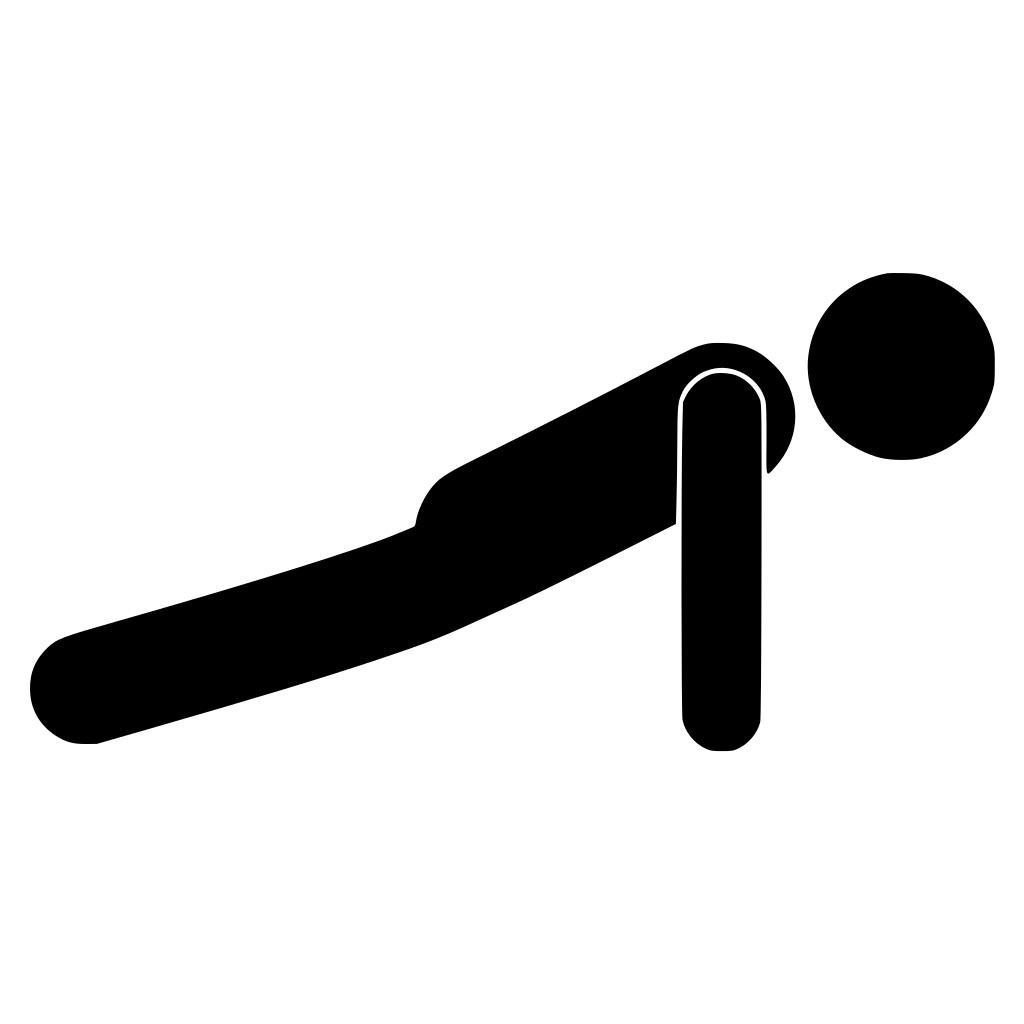 Push
Push-ups, dips and pike push-ups, for your chest, shoulders and the backs of your arms.
-
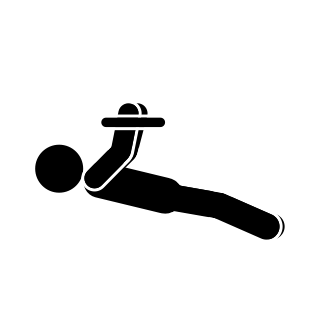 Pull
Rows and pull-ups, for your back and biceps. It needs something to hold on to, so it's often left out of home workouts.
-
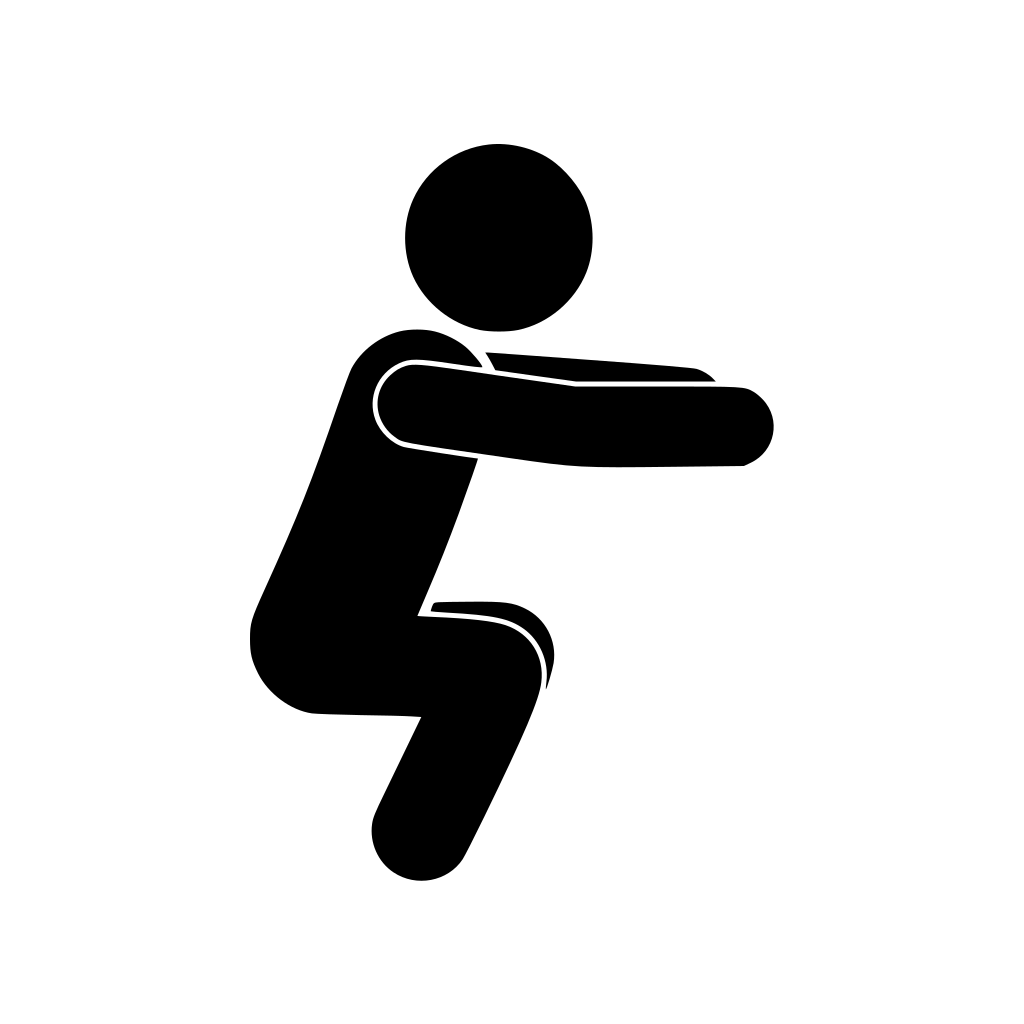 Squat
Sitting down and standing back up, on two legs and later on one.
-
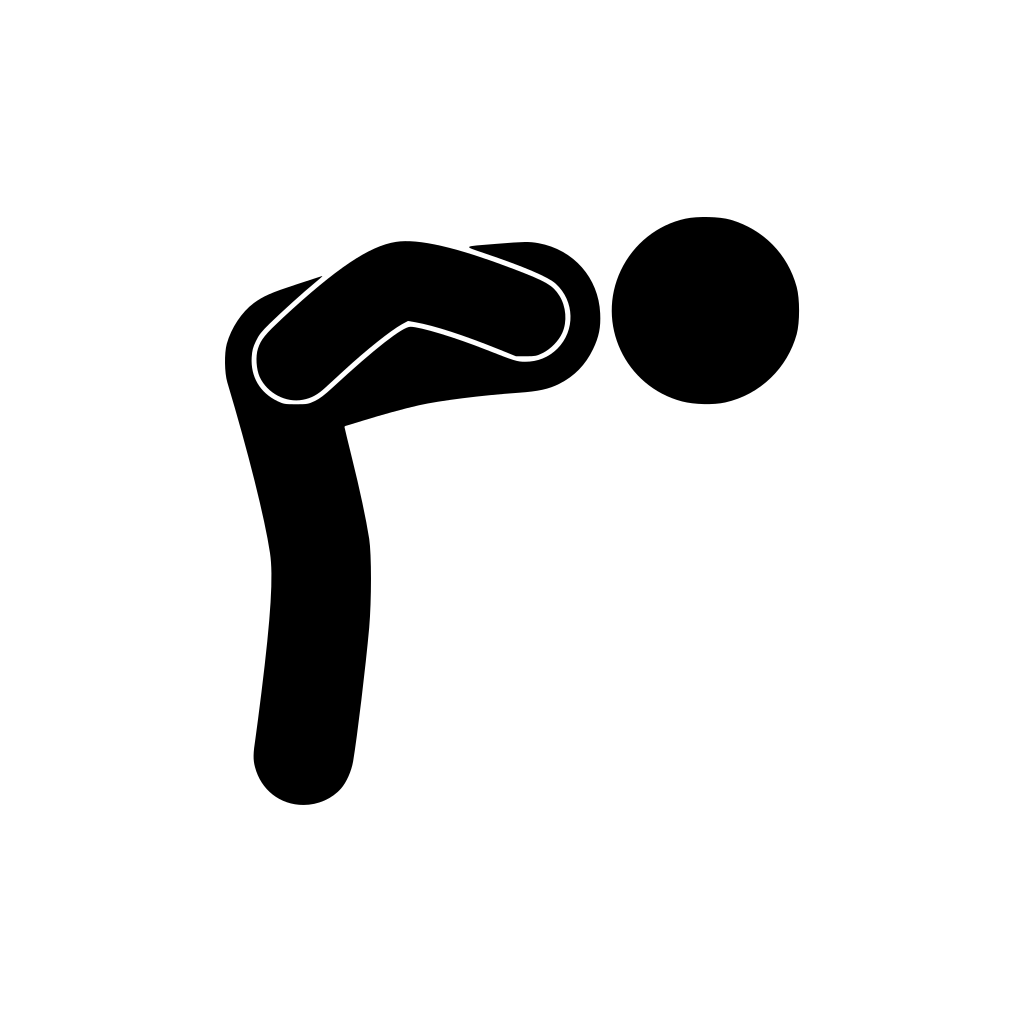 Hinge
Bending at the hips with a flat back, as in a glute bridge or single-leg deadlift.
-
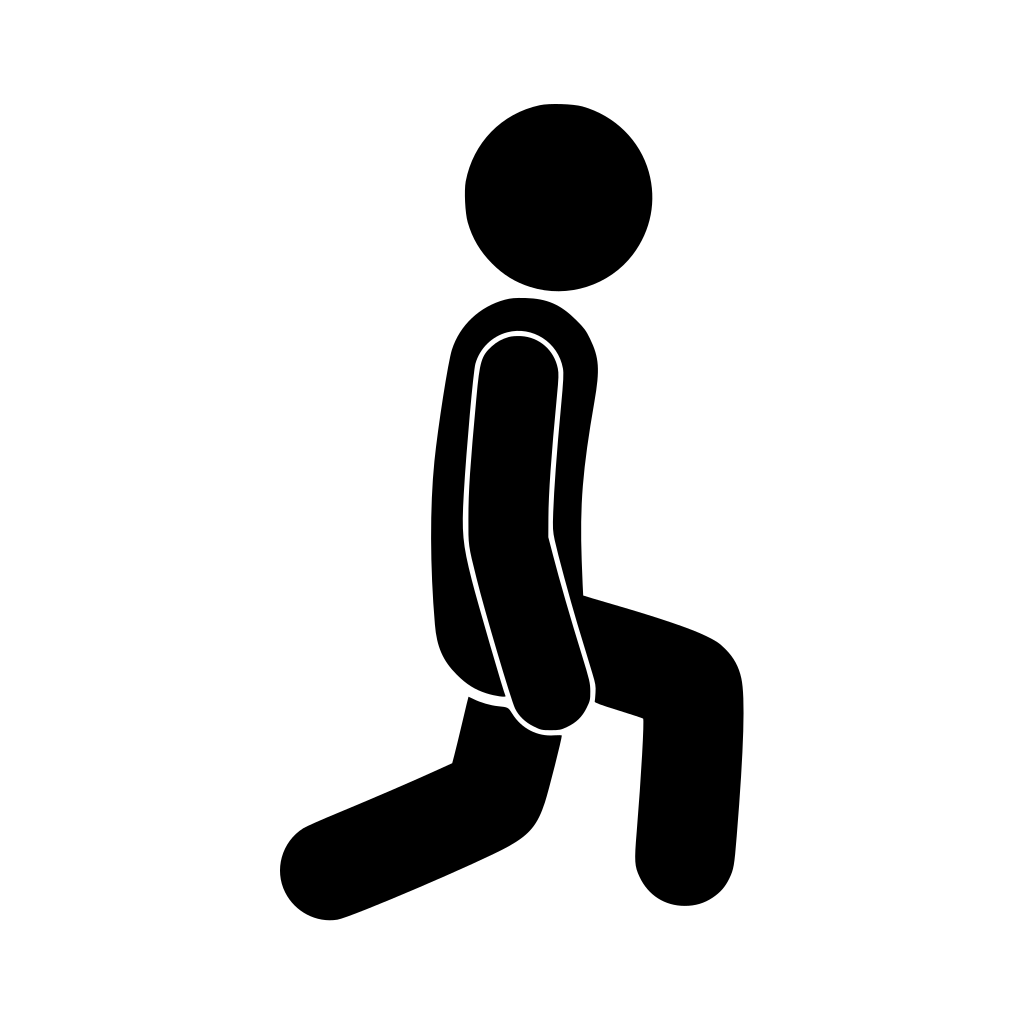 Lunge
Lunges, split squats and step-ups, which train each leg on its own.
-
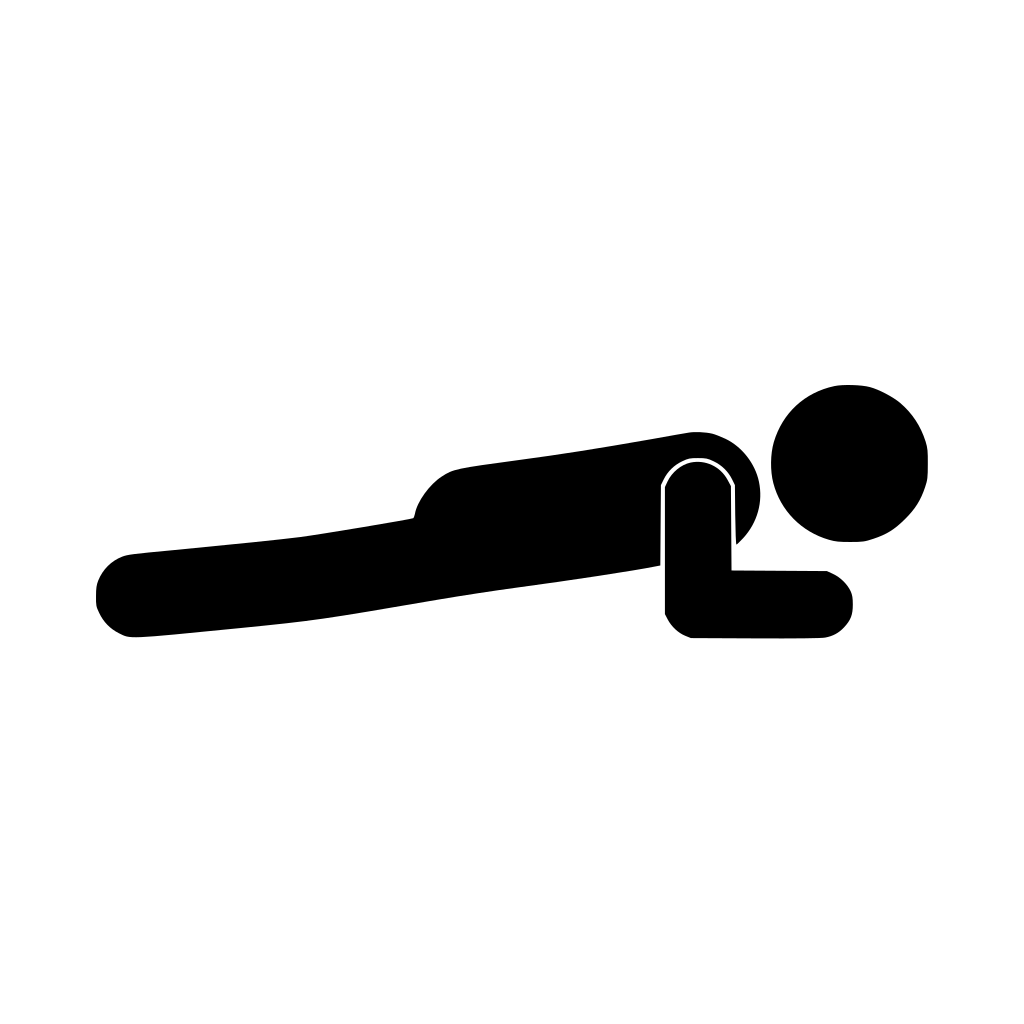 Brace
Holding your trunk still, as in a plank or hollow body hold.
How do calisthenics progressions work?
A progression is a ladder of versions of the same movement, from easy to hard. You train on the version you can do well, and step up a rung when it gets easy. There are four main ways to make a move harder:
- Leverage: change your body angle. A push-up against a wall is easier than one on the floor.
- Range: go further. A squat down to a chair is easier than a full one.
- One limb: move the work onto one arm or leg.
- Tempo: take three or four seconds to lower, or pause at the bottom.
Change one thing at a time. These are some common ladders, each ending on a harder move:
-
 Archer push-up
Work up from wall push-ups through knee, full and diamond push-ups. In an archer push-up you lower towards one hand while the other arm stays straight out to the side.
-
 Pike push-up
With your hands close to your feet and hips high, bend your elbows to lower your head towards the floor. Raise your feet on a chair to make it harder.
-
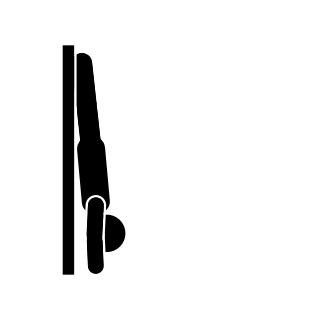 Wall handstand hold
The next step after pike push-ups. From a plank with your feet at the wall, walk your feet up and your hands in, and hold.
-
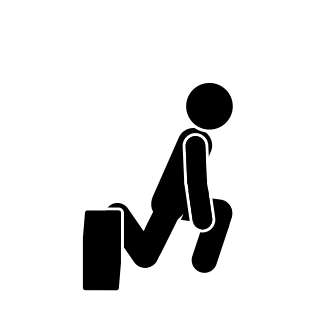 Bulgarian split squat
When squats are easy, do split squats, then raise your back foot on a chair. Lower your hips straight down.
-
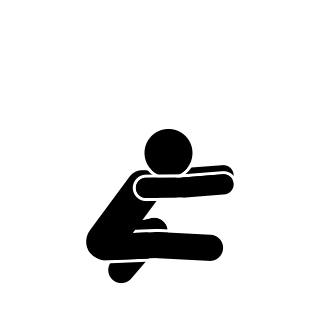 Pistol squat
A full squat on one leg. Build up to it by holding a door frame, or by sitting down to a chair on one leg and standing back up.
-
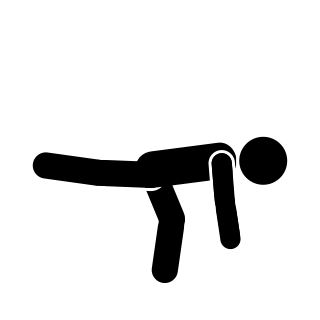 Single-leg deadlift
The step after glute bridges. Hinge forward on one leg while the other reaches behind you. Touch a wall for balance at first.
-
 Hollow body hold
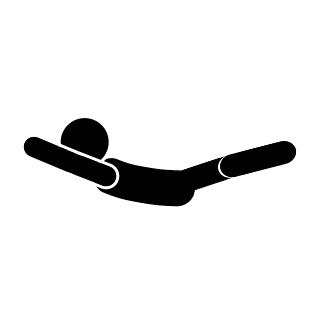
Lie on your back, press your lower back into the floor and lift your shoulders and legs. Start with bent knees, then straighten your legs and reach your arms overhead.
-
 Tucked L-sit
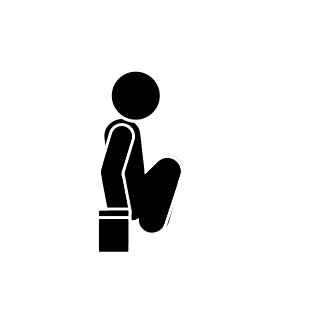
With your hands beside your hips, press down until you lift off the floor with your knees tucked. Then straighten one leg, then both, for a full L-sit.
For pulling, start with the Australian pull-up, also called an inverted row: lie under a bar or table edge and pull your chest up to it with your body straight. Bent knees make it easier, and a lower bar or raised feet make it harder. Rows build strength for pull-ups later.
What do you need at home?
Nothing, to begin with. Pushing, squatting, hinging, lunging and bracing all work on a bare floor. These help you keep progressing:
- Something to pull on. A bar at about waist height is ideal, and many parks have one. A doorway pull-up bar sits too high for rows.
- A sturdy table, with care. Only a heavy, solid one with a leg at each corner, not glass, folding or on a single centre leg. Hold it near a leg and pull gently first. If it lifts or wobbles at all, stop.
- A chair without wheels, for split squats, with its back against a wall.
- A wall for handstand holds and balance.
A simple beginner session
This covers all six patterns in about 20 minutes. Do each move, rest 20 seconds, and go to the next. After the last one, rest a minute and repeat, for three rounds. Pick versions you can do with good form.
| Move | Reps | Notes |
|---|---|---|
| Warm-up | 2 min | March on the spot, circle your arms, a few slow squats. |
| 1. Push-up | 8 | On your knees if you need to. |
| 2. Australian pull-up | 8 | Bent knees to make it easier. Supermen for 30 s if you have nothing to pull on. |
| 3. Squat | 10 | Three seconds down, one second up. |
| 4. Reverse lunge | 8 each leg | Step back and lower the back knee towards the floor. |
| 5. Glute bridge | 12 | Squeeze for a second at the top. |
| 6. Hollow body hold | 20 s | Knees bent to start. |
| Rest | 1 min | Then go again. |
Do it two or three times a week with a day off between, which is what the ACSM suggests for people new to strength training. If you're starting from scratch, see how to start working out at home, and how to build your own bodyweight workout when you want to make sessions of your own.
When should you move to a harder version?
Move up when you can do every set with clean reps and still have a rep or two left. For weights, the ACSM's advice is to add load once you can do one or two reps more than your target. In calisthenics, moving to a harder version does the same job.
For example, if you're aiming for three sets of eight knee push-ups and doing ten in every set, try full push-ups. Do as many as you can, then finish the set on your knees.
Clean reps means the full range, a steady body and a controlled lowering. You don't need to go until you can't do another rep. The ACSM's 2026 review found that training to that point didn't consistently change results. For holds, move on when you can hold the full time without losing position.
Muscles burning is normal. Sharp pain in a joint isn't, so step back down a rung if a move hurts, and check with a doctor or physio if you have an injury.
The Pull Your Weight pack
We made a Workout Pack in Streaks Workout for calisthenics. Pull Your Weight has 19 moves, including the Australian pull-up, archer and pike push-ups, pistol and shrimp squats, the wall handstand hold and the tucked L-sit. It has four workouts:
- Foundations: push, hinge, lunge and brace, with no equipment.
- Ground Up: lunges, hinges and raises for your legs, also with no equipment.
- Push & Pull: harder push-ups paired with rows and Bulgarian split squats.
- Skill Session: the hardest moves in the pack as straight sets, with full rest.
Some moves need a bar or sturdy table, a chair or a wall, and the workouts that use them say so. There are no hanging pull-ups. You can also add the pack's moves to workouts you build yourself.
If push-ups, squats and planks already feel easy, the Next Level pack comes with the app. Its three workouts use harder versions of the basics, such as squat jumps, push-ups with a punch, extended planks and burpees. In The Upgrade, each basic is followed straight away by its harder version.
Common questions
Can you get strong with calisthenics alone?
Yes, as long as you keep moving to harder versions. In one small study, men who trained with progressively harder push-ups for four weeks got stronger at the bench press, as did a group who trained on the bench press itself.
How often should a beginner do calisthenics?
Two or three times a week, with a rest day between sessions. That's what the American College of Sports Medicine suggests for people new to strength training, and the NHS recommends strengthening exercise on at least two days a week.
Can I do calisthenics without a pull-up bar?
Yes. Pushing, squatting, lunging, hinging and core work need only a floor. For pulling, a sturdy table or a low bar in a park lets you do rows, and supermen work your back if you have nothing to pull on.
Sources
- American College of Sports Medicine. Position stand: Progression models in resistance training for healthy adults. Medicine & Science in Sports & Exercise. 41(3):687-708 (2009). PubMed
- Currier BS, D'Souza AC, Singh MAF, et al. American College of Sports Medicine position stand: Resistance training prescription for muscle function, hypertrophy, and physical performance in healthy adults: an overview of reviews. Medicine & Science in Sports & Exercise. 58(4):851-872 (2026). PubMed
- Kotarsky CJ, Christensen BK, Miller JS, Hackney KJ. Effect of progressive calisthenic push-up training on muscle strength and thickness. Journal of Strength and Conditioning Research. 32(3):651-659 (2018). PubMed
- NHS. Physical activity guidelines for adults aged 19 to 64. nhs.uk
More guides
Bodyweight workouts with voice coaching, including the Pull Your Weight pack for calisthenics, a one-time purchase. Next Level's harder versions of the basics come with the app.