Plyometrics is jump training. Quick, springy jumps and hops teach your legs to produce force fast, and you can do them at home with nothing but a patch of floor. Start by learning to land softly, jump once or twice a week, and keep the number of jumps small while your legs get used to it.
Jumping is loud. If you have neighbours below you, jump on a ground floor, in a garage or at a park, or pick a time that won't bother anyone. On the other days, our quiet, no-jump workout keeps the peace.
What is plyometric training?
Plyometric training is any exercise where a muscle is stretched quickly and then contracts hard straight away. When you dip before a jump, the muscles and tendons in your legs stretch under load, a bit like a spring being pressed down. If you go straight up without pausing, that stretch helps you push off harder than you could from a standing start.
Coaches call this the stretch-shortening cycle. It has three parts. There's the dip (the stretch), a very short turnaround at the bottom, and the push (the shortening). Plyometric drills work on making that turnaround quick and smooth, with no visible pause between landing and taking off again.
Some moves use a big dip and aim for height or distance, like squat jumps. Others use a tiny dip and spend as little time on the ground as possible, like pogo hops. A beginner session can use both.
How do you land a jump safely?
Learn to land quietly before you try to jump higher or further. A loud thud usually means your legs aren't absorbing the landing.
- Land through the balls of your feet and let your heels come down, rolling from toe to heel.
- Bend your knees and keep them in line with your toes. Don't let them cave in towards each other.
- Push your hips back as you land, as if starting a squat, with your chest up and your shoulders over your knees.
- Hold the landing for a moment while you're learning, until you can land without wobbling. Quick, bouncing jumps come later.
To practise, try drop squats. Rise onto your toes, then drop quickly into a quarter squat and freeze. Check your knees and hips in a mirror, and do a few at the start of every session.
Grass or a gym mat is kinder than concrete, and stable, cushioned shoes help.
How often should you do plyometrics, and how many jumps?
Once or twice a week is enough when you're starting out, with at least 48 hours between sessions. Before the next one, check you have no lingering soreness or pain.
Coaches count plyometric volume in contacts, which is each time your feet land. For people new to plyometrics, one Human Kinetics text suggests low to medium intensity work with around 40 contacts per session. It adds up quickly. Two sets of eight pogo hops is already 16.
Do your jumps after a warm-up, while your legs are still fresh, and before anything tiring such as strength work. End a set as soon as your landings get loud or your knees drift in.
Who should be careful with jump training?
If you have joint problems, a current injury, or pain in your knees, ankles, hips or back, check with a doctor or physio before you start. The same goes if you haven't exercised for a long time.
It helps to build some leg strength first. If bodyweight squats and lunges still feel hard, spend a few weeks on those (our calisthenics for beginners guide can help). And if a jump hurts in a joint, rather than the usual burn in your muscles, stop.
Which jumps should beginners start with?
These six moves need only flat ground. The first four are the easiest, and the last two are the next step up.
-
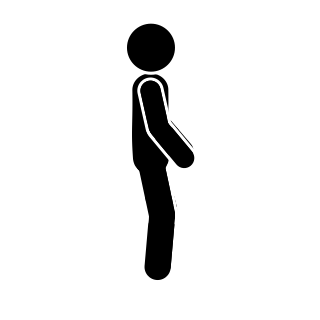 Pogo hops
Small, quick bounces off the balls of your feet, knees almost straight. Spend as little time on the ground as you can.
-
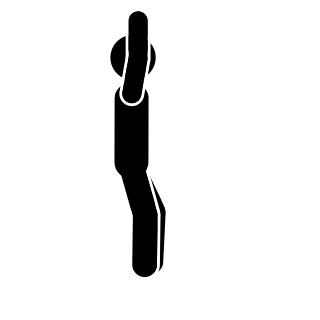 Squat jump
Dip into a half squat, swing your arms and jump straight up. Land softly back in the squat and reset.
-
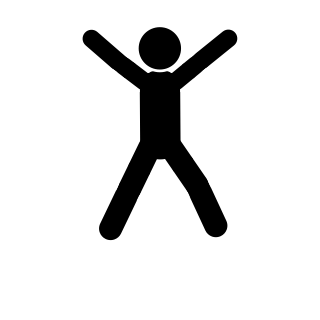 Star jump
Crouch, then jump with your arms and legs spread wide. Bring everything back in before you land softly.
-
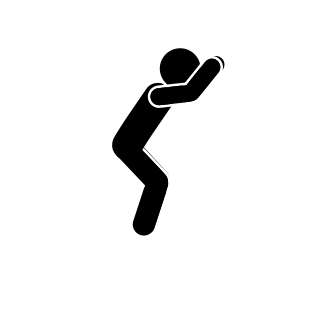 Broad jump
Push your hips back and swing your arms behind you, then jump forward. Stick the landing with soft knees, then walk back.
-
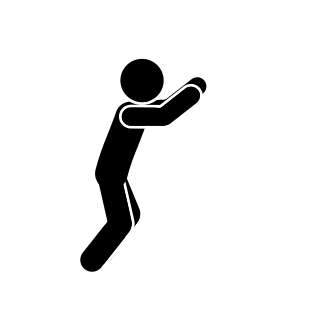 Frog jump
From a deep, wide squat with your hands near the floor, leap forward and land back in the squat. Add it once broad jumps feel easy.
-
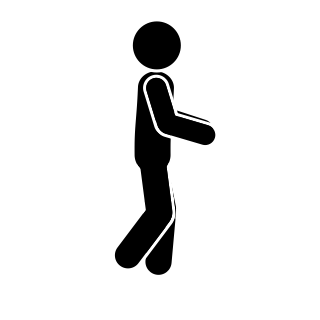 Single-leg hops
Small hops on one foot, landing softly with your hips level. Leave these until two-footed landings are solid.
Do you need a box?
No. You can train plyometrics for months without one. Box jumps are a good next step, though, because you jump for height but land on top of the box instead of dropping back to the floor.
-
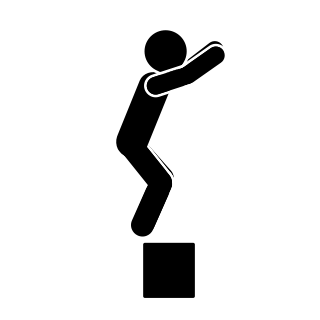 Box jump
Swing your arms back, then drive them up as you jump. Land softly on the box with both feet, knees bent, stand tall, then step down.
Be careful what you jump onto. Chairs, coffee tables, ottomans and stacked crates or books can slide, tip or collapse when you land near an edge. Use something made for the job, like a wooden or foam plyo box with a wide base, or a solid step such as the bottom stair. Start low. A box you can land on quietly is high enough.
Step down rather than jumping down. Jumping off a box and springing up as you land is a harder exercise called a depth jump, best left until box jumps are comfortable.
A beginner plyometric workout
This session takes about 15 minutes and adds up to 40 landings. Rest for about a minute between sets, or longer if your legs feel flat.
| Move | Sets and reps | Notes |
|---|---|---|
| Warm-up | 5 min | March or jog on the spot, swing your legs, then do 10 slow squats and 5 drop squats. |
| 1. Pogo hops | 2 × 8 | Quick and light, knees almost straight. |
| 2. Squat jumps | 2 × 5 | Reset between each jump. Land quietly. |
| 3. Star jumps | 2 × 4 | Arms and legs back in before you land. |
| 4. Broad jumps | 2 × 3 | Hold each landing for a second, then walk back. |
| Cool-down | 3 min | Walk around, then stretch your calves and the fronts of your thighs. |
How do you progress?
When every landing stays quiet to the last rep and you're not sore two days later, make the session harder by changing one thing at a time:
- Add a set to one or two moves, building up slowly over a few weeks.
- Swap in harder moves. Frog jumps in place of squat jumps, then single-leg hops in place of some of the pogo hops.
- Add height with box jumps on a low, solid box.
- Move to timed blocks. Doing each move for 30 seconds means more jumps and a higher heart rate (our heart-rate zones guide covers what that means in a short workout).
Stay at once or twice a week while you do this, and add jumps to a session before adding another session.
The Jump Street pack
Jump Street is a Workout Pack in Streaks Workout with 12 plyometric moves and four workouts built from them. Spring Loaded is the easy one, with pogo hops, frog jumps, plank jacks, star jumps and squat jumps in 30-second blocks over three rounds. That's more jumps than the session above, so try it once that feels easy. Springboard steps it up on flat ground, adding single-leg hops and 180° jump squats.
Power Builder needs a sturdy box or step for box jumps, lateral box jumps, depth jumps and plyo step-ups. Explosive is the hard one, with broad jumps, single-leg hops and burpee broad jumps. You can also add the pack's moves to your own workouts in the app.
Common questions
Can you do plyometrics every day?
Not when you're starting out. Once or twice a week is plenty, with at least 48 hours between sessions. On the other days, do strength work, walking or stretching.
Can you do plyometrics without a box?
Yes. Pogo hops, squat jumps, star jumps, frog jumps, broad jumps and single-leg hops all need only flat ground. Box jumps can come later, once your landings are solid.
Are plyometrics bad for your knees?
Every landing puts load through your knees, so land softly with your knees bent and in line with your toes, and keep the number of jumps low at first. If you already have knee pain or an injury, check with a doctor or physio before you start.
Can you do plyometrics in an apartment?
You can, but jumping is loud even with soft landings, and the people below will hear it. If you have downstairs neighbours, jump at a park, in a garage or on a ground floor, or pick a time that suits them.
Sources
- Liu RQ, Gearity B, Kuklick C. Integrating plyometric training for high school soccer athletes, part 1. NSCA Coach 7(4), pages 34 to 41. National Strength and Conditioning Association. nsca.com (PDF)
- Hospital for Special Surgery. A beginner's guide to plyometrics workouts, with exercise physiologist Matthew Accetta. 22 January 2026. hss.edu
- Hoffman R, Collingwood TR. Understand the fundamentals of plyometric training. Excerpt from Fit for Duty, 3rd edition. Human Kinetics. humankinetics.com
More guides
Short home workouts with voice coaching, plus the Jump Street pack of plyometric moves and workouts, from soft-landing basics to box jumps. A one-time purchase, with no subscription.