A good warm-up for a home workout takes about five minutes. Start with a minute of easy movement like marching on the spot, then loosen your shoulders, spine and hips with arm circles, a torso twist and leg swings, and finish with a few squats and jumping jacks. Keep it moving, and save long stretches for after your workout.
Why warm up at all?
A warm-up eases you into exercise instead of going from the couch straight into the hardest part. The Mayo Clinic describes it as warming up your heart and blood vessels gradually, and the NHS recommends warming up before exercise to make your workouts more effective.
The research mostly backs this up. A 2010 review of 32 studies found that warming up improved performance in 79% of the measures they looked at, and found little evidence that it does any harm. The authors also noted that few of the studies were well-run randomised trials, so it's not the last word.
Injuries are less clear. A 2006 review found five good trials on warming up and injury: three found fewer injuries, and two found no real difference. The authors said there wasn't enough evidence to recommend warming up or to drop it, though the balance leaned in its favour. The Mayo Clinic says much the same, noting the debate and that a proper warm-up poses little risk.
If you have an injury, back pain or a health condition, check with a doctor or physio about what's right for you.
How long should you warm up for?
Usually five to ten minutes. The NHS warm-up takes at least 6 minutes, with the note to go longer if you feel the need, and the Mayo Clinic's examples use 5 to 10 minutes of easier activity, such as walking briskly before a run.
For a short bodyweight session at home, the five-minute sequence below is a reasonable start. Spend longer when the session is harder, when the room is cold, first thing in the morning, or when you've been sitting all day. You should feel warmer and a little out of breath, not tired.
Should you stretch before a workout?
Moving stretches suit a warm-up better than long holds. A 2016 review by Behm and colleagues found that holding static stretches for 60 seconds or more per muscle reduced performance by 4.6% on average when people were tested a few minutes later, compared with 1.1% for shorter holds. Moving stretches such as leg swings gave small improvements instead.
The same review found no clear drop in the studies where people moved again after stretching. So a quick stretch for a tight spot is fine, as long as you keep moving afterwards. Long holds work better in your cool-down, or as their own session like our 5-minute desk stretch routine.
A five-minute warm-up you can do anywhere
You don't need any equipment, just enough room to swing your arms and a wall or chair to hold for the leg swings. Start gently and let each move get a little bigger as you go.
-
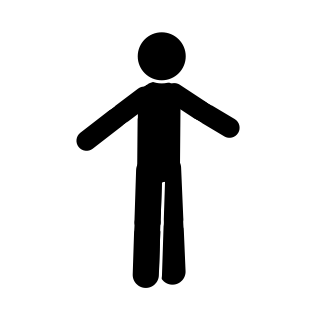 Arm circles
Hold your arms out to the sides and draw small circles, letting them grow. Keep your shoulders down, away from your ears, and switch direction halfway.
-
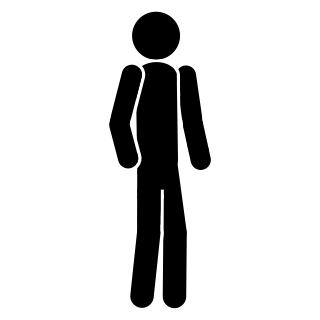 Shoulder rolls
With your arms relaxed, lift your shoulders towards your ears, roll them back and down, and make the biggest circle you can. Then roll them forwards.
-
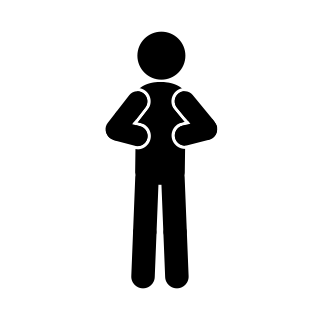 Standing torso twist
Keep your hips facing forward and turn your upper body from side to side, letting your arms follow loosely. Only turn as far as feels easy.
-
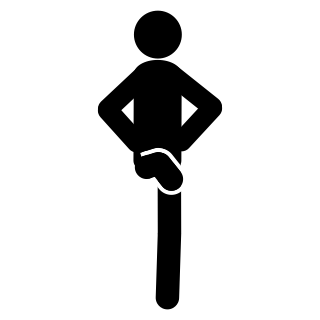 Front-to-back leg swings
Hold a wall or chair if you need to. Stand tall and swing one leg forwards and back from the hip, letting it swing freely rather than forcing the height.
-
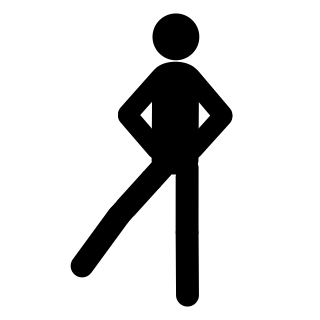 Side-to-side leg swings
Face your support and swing one leg across your body and out to the side. Keep your hips square and don't lean away from the swinging leg.
-
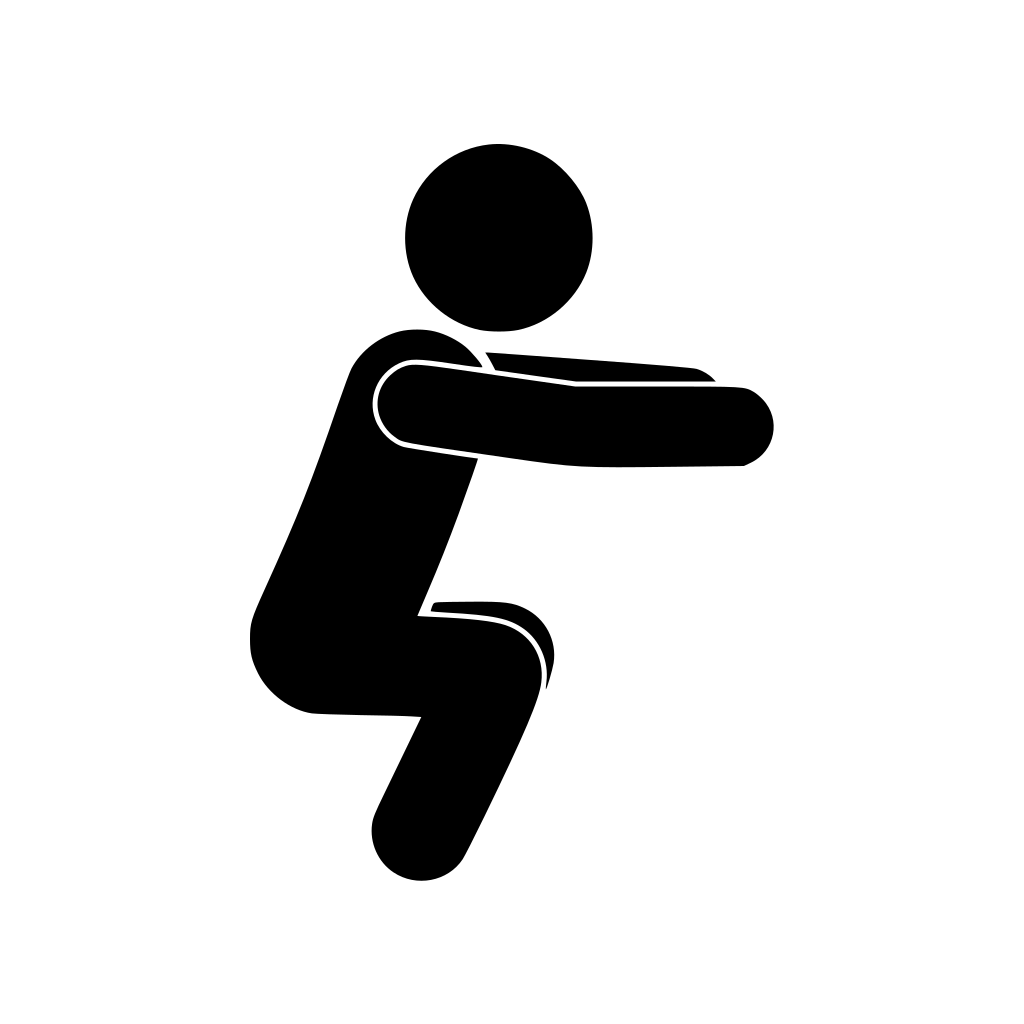 Slow squats
Feet about shoulder-width apart, sit back and down as far as is comfortable, then stand. Go slowly and don't go deep on the first few.
-
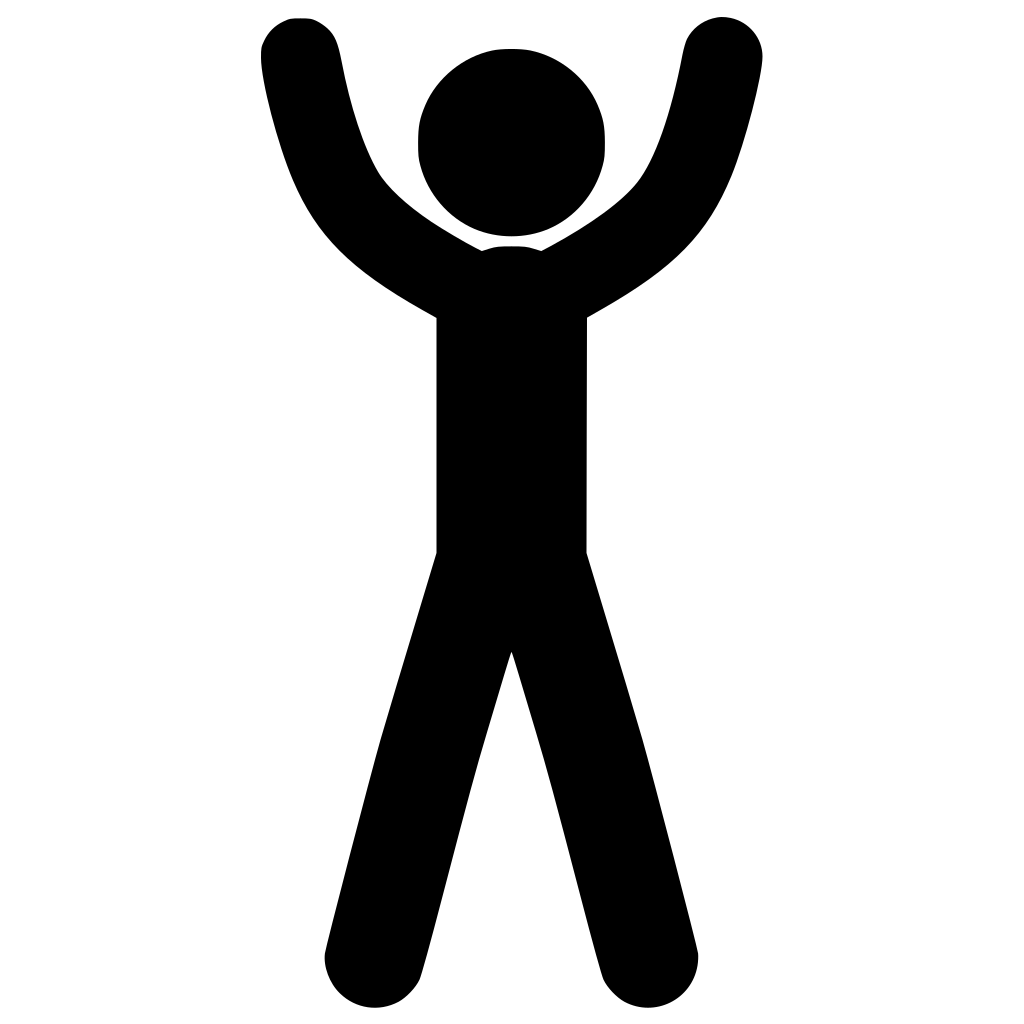 Jumping jacks
Jump your feet out as your arms go up, then back in. If you need to be quiet, step one foot out at a time instead.
| Move | Time | Notes |
|---|---|---|
| 1. March on the spot | 1 min | Swing your arms and lift your knees a little higher as you go. |
| 2. Arm circles | 30 s | Small to big, then switch direction. |
| 3. Shoulder rolls | 30 s | Backwards, then forwards. |
| 4. Torso twist | 30 s | Hips facing forward. |
| 5. Front-to-back leg swings | 20 s each leg | Hold a wall or chair. |
| 6. Side-to-side leg swings | 20 s each leg | Keep your hips square. |
| 7. Slow squats | 30 s | About 10, getting a little deeper each time. |
| 8. Jumping jacks | 30 s | Or step jacks if you need to be quiet. |
That comes to about five minutes. Go straight into your workout afterwards, so you don't cool down again while you find the next video or set up your space.
How do you change the warm-up for the session ahead?
Make the end of your warm-up look like the start of your workout, only easier. A few examples:
- Jumping and plyometrics. Add a minute of small hops on the spot and a few gentle squat jumps, building up the height. Our guide to plyometrics at home covers landing softly.
- Kettlebells. Add bodyweight hip hinges and a few light deadlifts before any swings. The kettlebell guide for beginners has a three-minute warm-up built into its plan.
- Push-ups and upper body. Add a few push-ups against a wall or bench before doing them on the floor.
- Hard intervals. Before something like a Tabata workout, add another minute or two, and do a few short bursts at about half effort first.
-
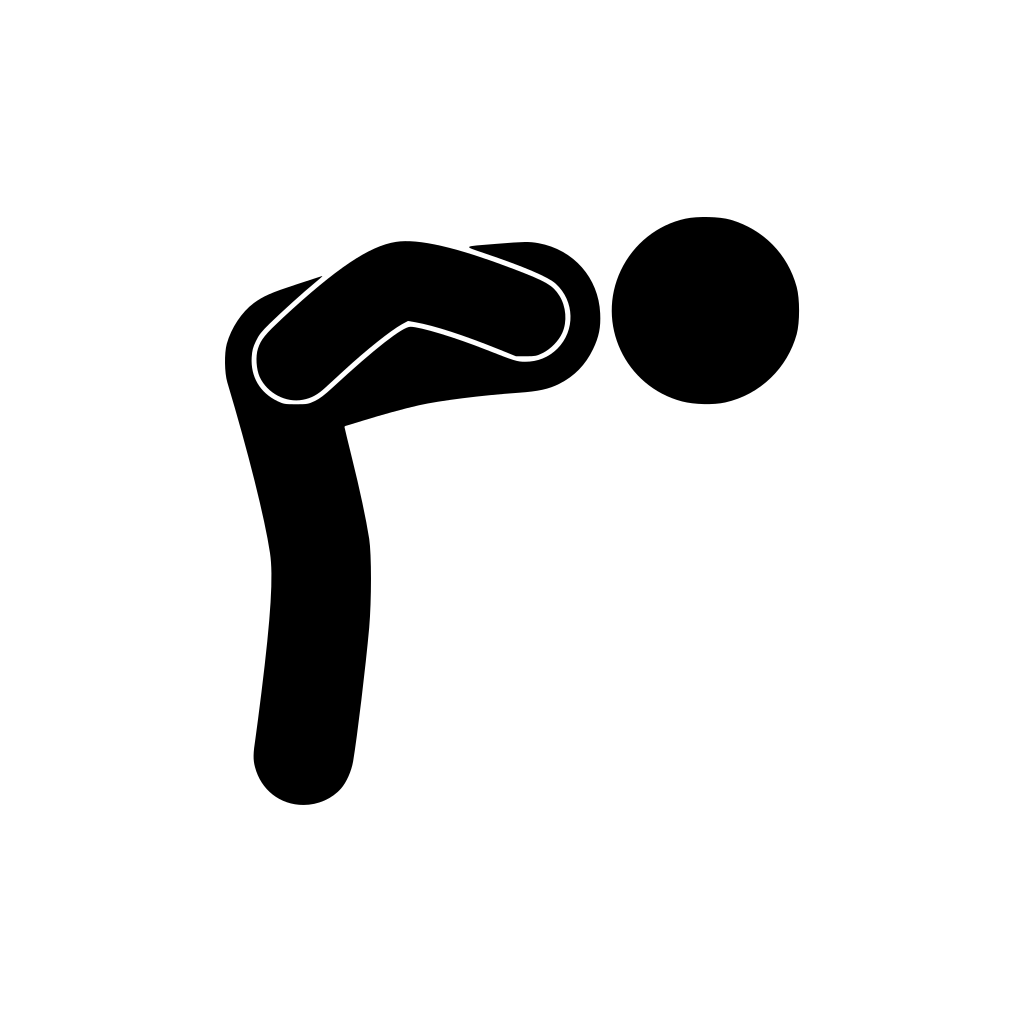 Hip hinge
Soft knees, hands on your hips. Push your hips back with a flat back until you feel a stretch in your hamstrings, then stand tall.
If you're new to exercise, a gentle session can be its own warm-up: start the first round slowly and pick up the pace from there. Our guide to starting to work out at home has more on easing in.
What about cooling down?
Cooling down means a few minutes of easier movement after your workout, rather than stopping dead. The Mayo Clinic says it lets your heart rate and blood pressure come back down gradually, with examples like walking briskly for 5 to 10 minutes after a run.
After a home workout, walk around the room or march slowly until your breathing settles, then stretch. The NHS cool-down stretches take about 5 minutes, holding each one for 15 to 20 seconds. This is the place for the longer stretches you left out of your warm-up.
The Shake It Out pack
Shake It Out is a free Workout Pack in Streaks Workout with six of the moves in this guide, each with its own animation: arm circles, forwards and backwards shoulder rolls, the standing torso twist, and both kinds of leg swings. Its one workout, Quick Loosen Up, runs through them and finishes with 30 seconds of jumping jacks, with the leg swings done on each leg.
It takes about five minutes, so you can run it before another workout, or on its own after a long stretch at your desk. Once you've added the pack, its moves also show up when you build your own workouts, so you can put them at the start of one of yours. For afterwards, the Limber Up pack has a Cool-Down workout of easy stretches for your legs, back and shoulders.
Common questions
How long should a warm-up be?
The NHS warm-up takes at least 6 minutes, and the Mayo Clinic's examples use 5 to 10 minutes of easier activity. For a short bodyweight session at home, five minutes of easy movement is a good start. Go longer before harder sessions, or when you're cold or stiff.
Should you stretch before a workout?
Moving stretches like arm circles and leg swings are a good fit for a warm-up. A short static stretch is fine too if you move again afterwards. Save long holds, a minute or more on one muscle, for after your workout, since a 2016 review found they can reduce performance straight afterwards.
Does warming up prevent injuries?
It might, but the evidence is mixed. A review of five trials found three where warming up lowered injuries and two where it didn't, and its authors said there wasn't enough evidence either way. The Mayo Clinic notes the debate but says a proper warm-up poses little risk.
What's the difference between a warm-up and a cool-down?
A warm-up gets you moving gradually before the hard part. A cool-down is a few minutes of easier movement after it, so your breathing and heart rate can settle, and it's a good time for longer stretches.
Sources
- NHS. How to warm up before exercising. Reviewed 24 June 2026. nhs.uk
- NHS. How to stretch after exercising. Reviewed 16 March 2026. nhs.uk
- Mayo Clinic Staff. Aerobic exercise: how to warm up and cool down. Mayo Clinic. mayoclinic.org
- Fradkin AJ, Zazryn TR, Smoliga JM. Effects of warming-up on physical performance: a systematic review with meta-analysis. Journal of Strength and Conditioning Research, 2010, 24(1): 140-148. PubMed
- Fradkin AJ, Gabbe BJ, Cameron PA. Does warming up prevent injury in sport? The evidence from randomised controlled trials? Journal of Science and Medicine in Sport, 2006, 9(3): 214-220. PubMed
- Behm DG, Blazevich AJ, Kay AD, McHugh M. Acute effects of muscle stretching on physical performance, range of motion, and injury incidence in healthy active individuals: a systematic review. Applied Physiology, Nutrition, and Metabolism, 2016, 41(1): 1-11. PubMed
More guides
Short workouts with voice coaching, plus Shake It Out, a free Workout Pack of warm-up moves. A one-time purchase, with no subscription.