You can work out at home without a subscription, and without spending anything at all. Your body weight is enough to get stronger, a patch of floor is the only equipment you need, and a short circuit of squats, push-ups, lunges and planks a few times a week works most of your body. If you'd like an app to guide you, you don't need a monthly fee for that either.
We make Streaks Workout, which you buy once, so we've kept it to one section near the end. Everything before that is free.
What do you need to work out at home?
Probably nothing you don't already have. A clear bit of floor with room to lie down and stretch your arms out is enough for every move here. A few things help, but none are essential:
- A mat, rug or folded towel for floor moves like planks and glute bridges, so your knees and elbows aren't on bare boards or tiles.
- A wall and a sturdy chair open up a few more moves, such as wall sits and tricep dips.
- A timer. The one on your phone is fine.
Does working out without equipment actually work?
Yes. Exercise that uses your own body weight counts as strength training, and the NHS lists push-ups and sit-ups among the ways to strengthen your muscles.
It helps your heart and lungs too. In a small 2021 study from McMaster University, inactive young adults did an 11-minute bodyweight routine three times a week for six weeks, and their aerobic fitness improved compared with a group that didn't train. Our guide to starting to work out at home goes into more detail.
How often should you work out?
Aim for at least two strength sessions a week. The NHS and the CDC both recommend activities that strengthen all the major muscle groups on at least two days a week for adults, plus at least 150 minutes of moderate activity or 75 minutes of vigorous activity across the week.
A short home workout covers the strength part. Start with two or three sessions in your first week, on days that aren't back to back, and build from there. If you have an injury, a health condition, or haven't exercised in a long time, check with your doctor or physio first.
Which exercises should you start with?
These six cover your legs, chest and arms, the back of your body and your core, and every one has an easier version. Start with the easier version if you need to, and move on once it feels steady.
-
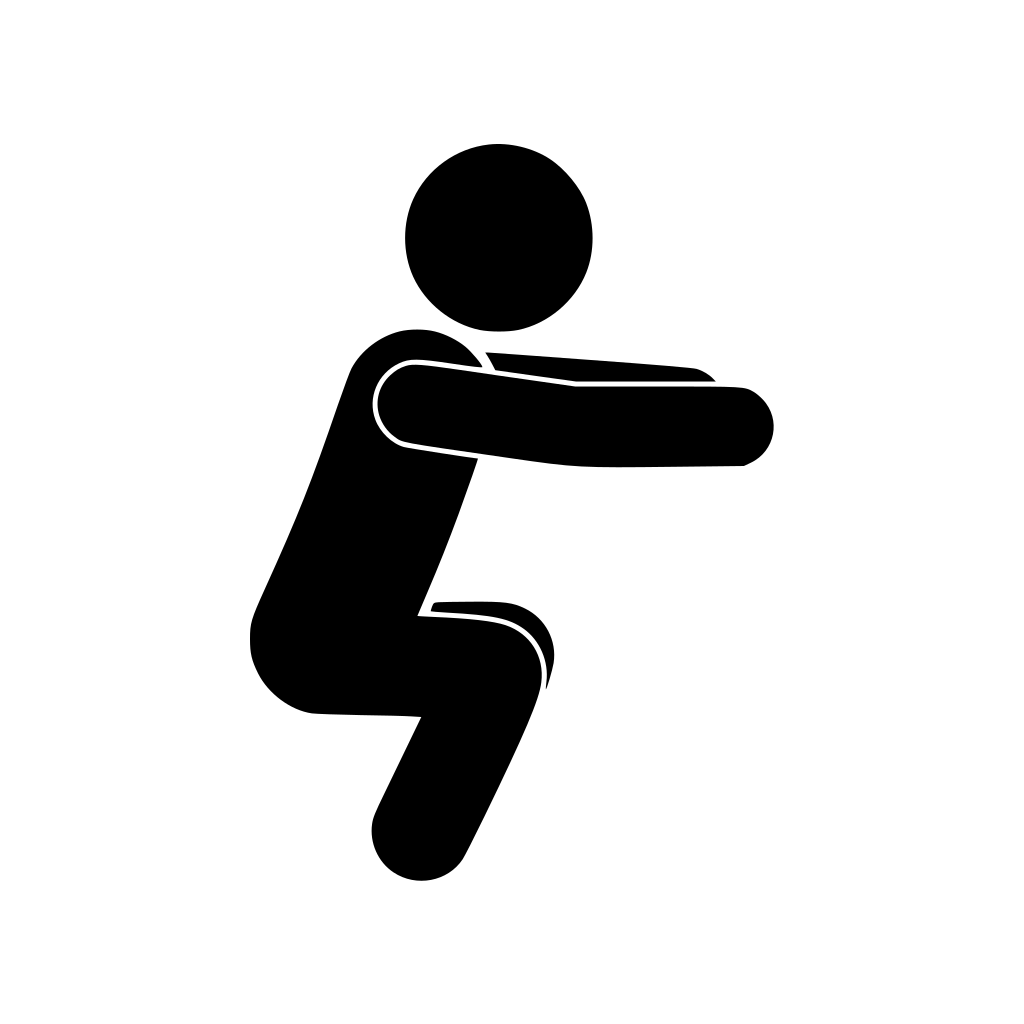 Squat
Feet shoulder-width apart, sit back and down as if onto a chair, then stand. Easier: sit onto a real chair and stand back up.
-
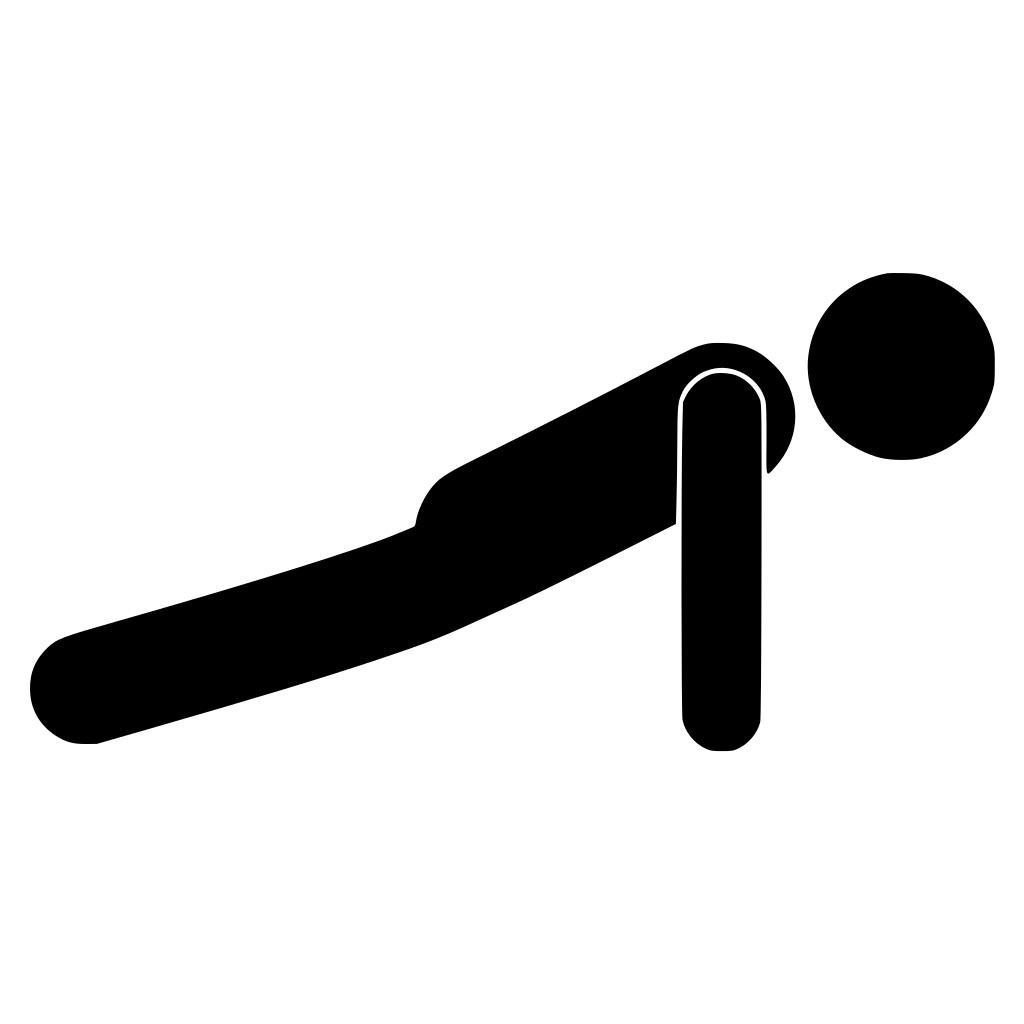 Push-up
Hands a little wider than your shoulders, body straight, lower your chest and push back up. Easier: from your knees, or hands on a bench or wall.
-
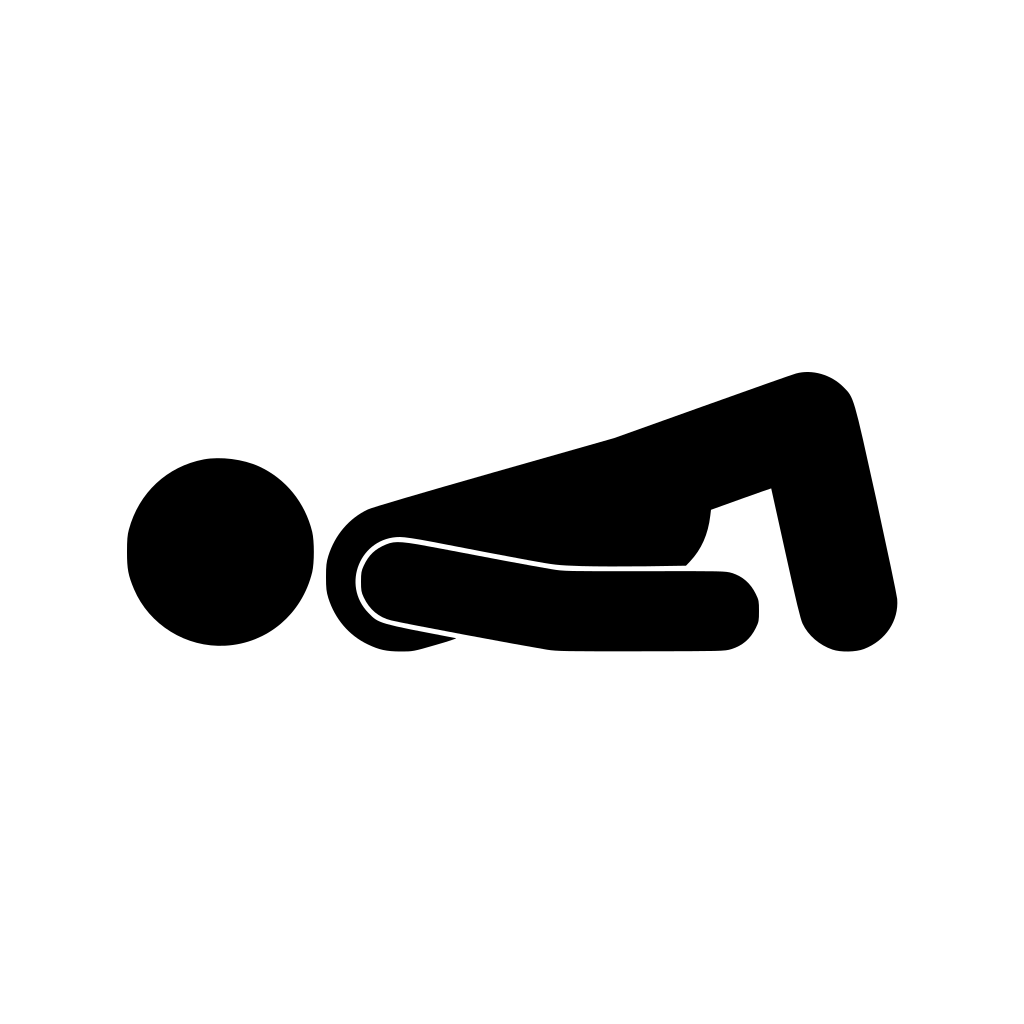 Glute bridge
Lie on your back with your knees bent and feet flat. Push through your heels to lift your hips, squeeze, and lower slowly.
-
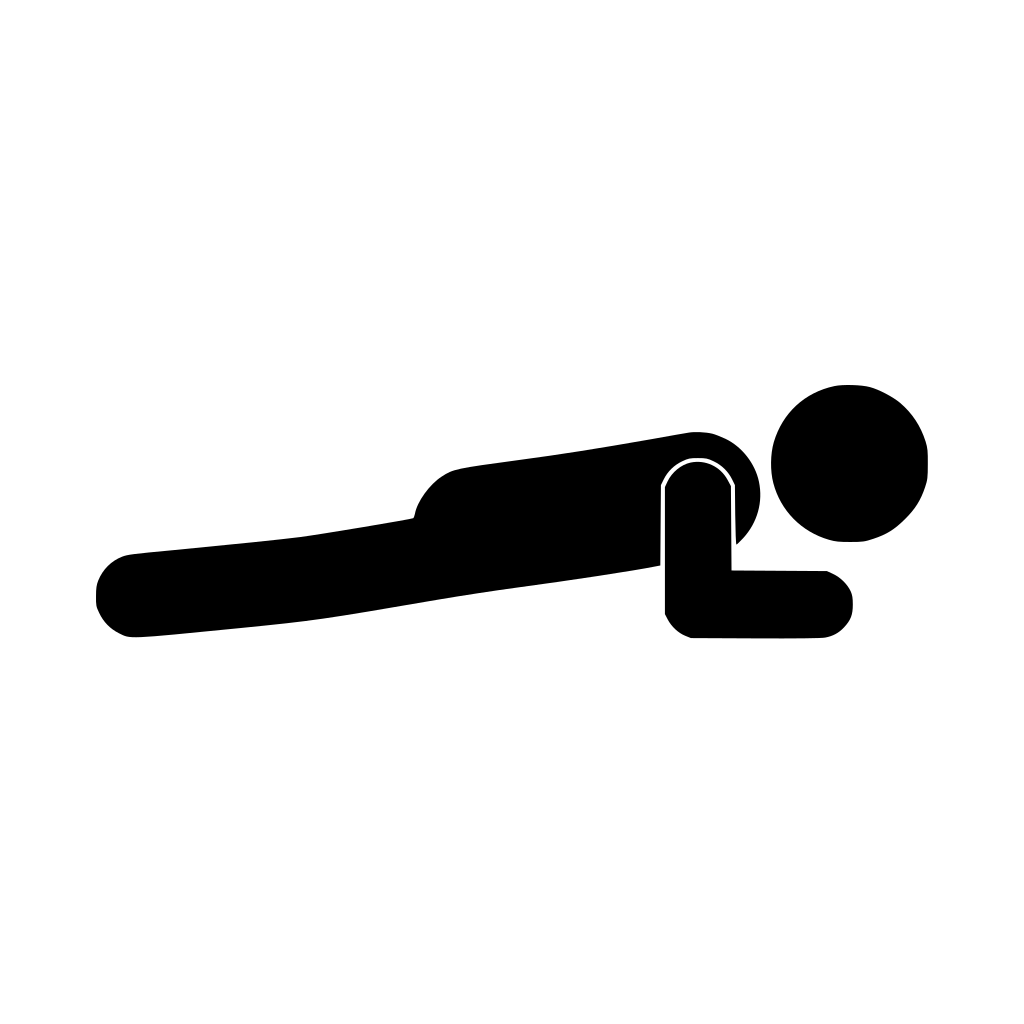 Plank
On your forearms, body straight from head to heels, and hold. Easier: from your knees, and rest whenever you need to.
-
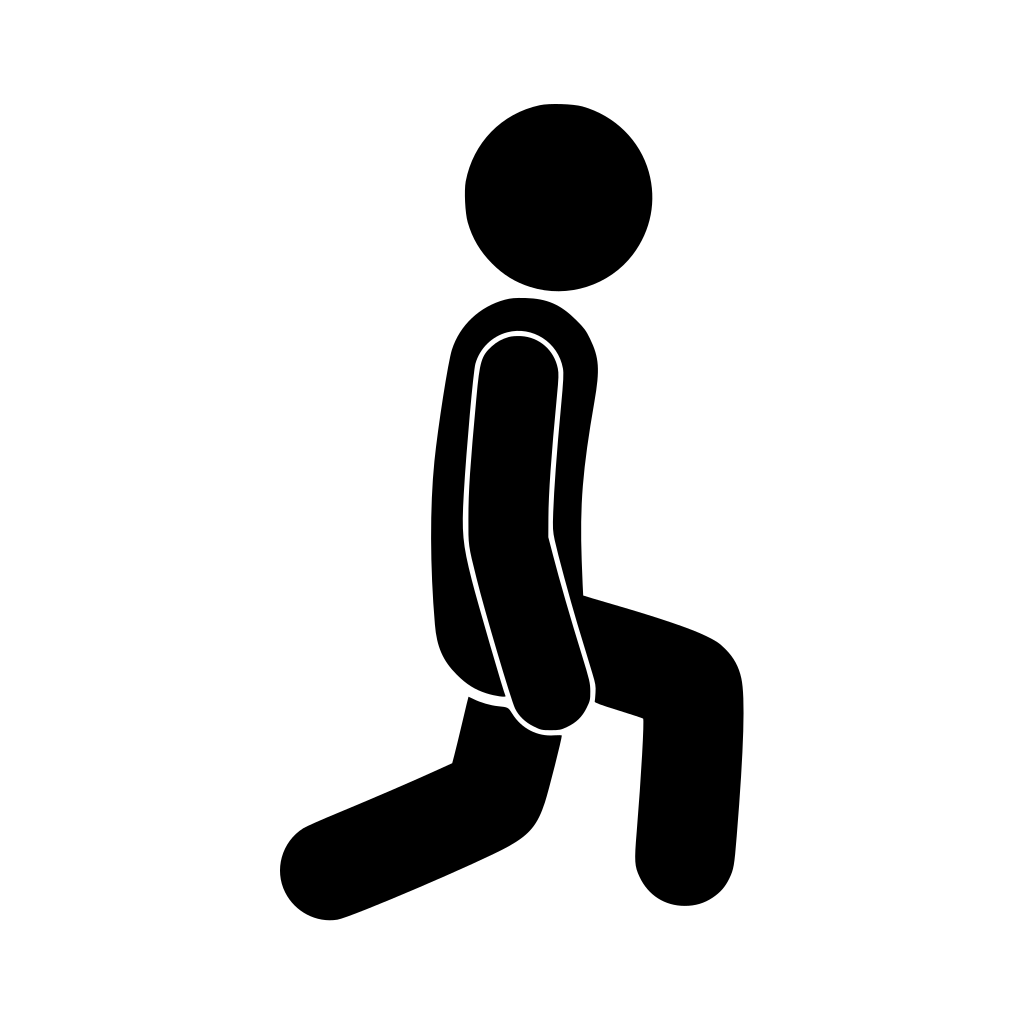 Lunge
Step forward and bend both knees until the back one nears the floor, then push back and switch legs. Easier: hold a wall or chair, and don't go as low.
-
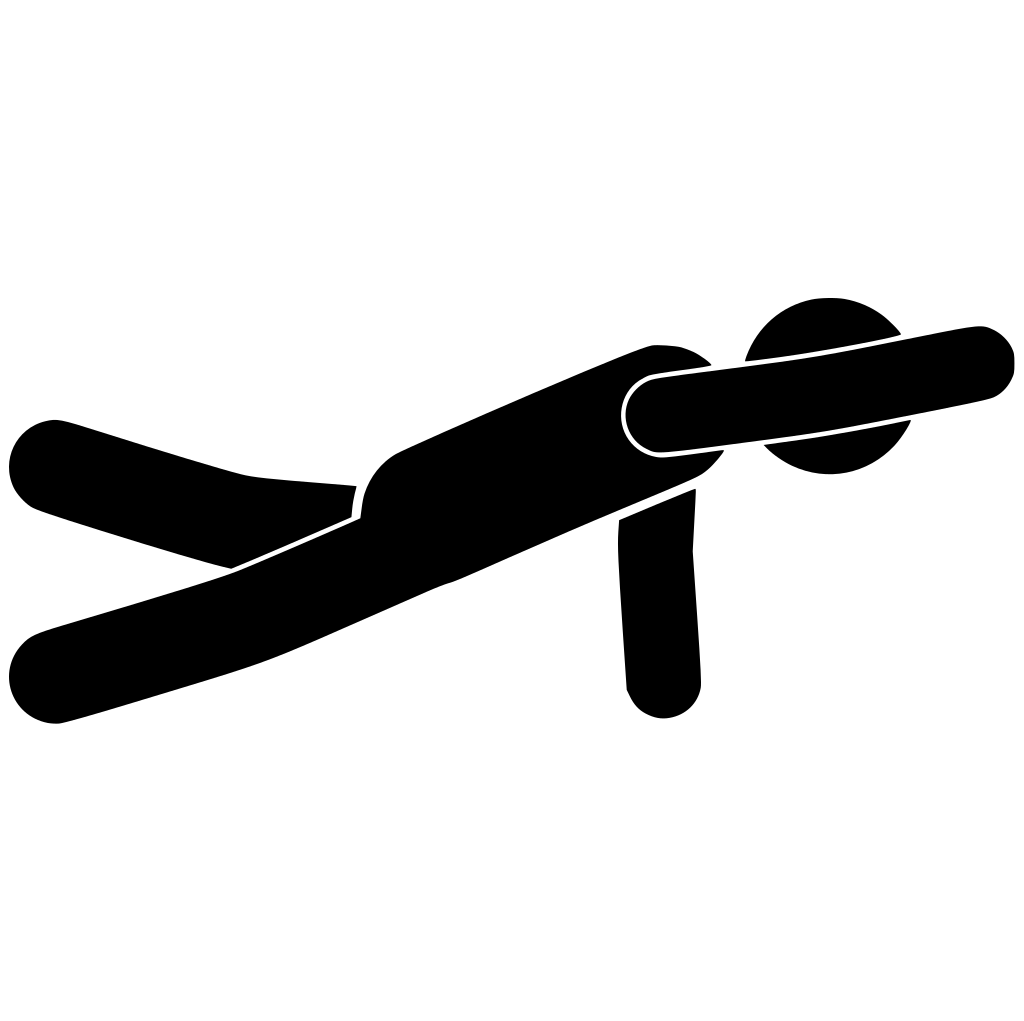 Bird dog
On hands and knees, reach one arm forward and the opposite leg back, hold for a moment, and switch. Easier: move just the arm, or just the leg.
A free 12-minute workout
Do each move for 40 seconds and rest for 20. Go through all six, then do them all again. The order switches between body parts, so your legs get a break while your arms or core work.
| Move | Time | Notes |
|---|---|---|
| 1. Squat | 40 s | Onto a chair if you like. |
| 2. Push-up | 40 s | From your knees or against a bench. |
| 3. Glute bridge | 40 s | Slow on the way down. |
| 4. Plank | 40 s | Drop to your knees when you need to. |
| 5. Lunge | 40 s | Alternate legs. |
| 6. Bird dog | 40 s | Alternate sides. |
| Repeat | Go through all six once more. |
If 40 seconds is too much at first, work for 30 and rest for 30, or stop after one round. Some soreness a day or two later is normal with new exercise. Sharp pain isn't, so stop and swap that move for another. A few minutes of easy movement first, like our five-minute warm-up, is a good way to start.
How do you keep going without paying for a coach?
Mostly by making it a habit and keeping track of what you've done. These help:
- Same time, same spot. Pick a time you can usually keep, like before breakfast, and leave your mat where you'll see it.
- Keep a record. A note or a calendar works. With an Apple Watch, Apple's free Workout app records the session and the Fitness app on your iPhone keeps your history and Activity rings.
- Make it harder bit by bit. Add a third round, work a little longer, rest a little less, or try a harder version of a move, such as push-ups from your toes. Our calisthenics guide explains how progressions work.
- Change the moves now and then. Our guide to building your own bodyweight workout shows how to swap exercises and keep the plan balanced, and there's a quiet, no-jump version for apartments.
How does a one-time purchase compare with a monthly fee?
With a subscription you pay every month or year for as long as you keep it, so the cost adds up the longer you use it. You pay for a one-time purchase once. Which suits you depends on what you'd use.
A monthly fee usually pays for something ongoing, like new classes, videos with trainers and lots of workout types. If you'd use that variety most weeks, it can be good value. Apple Fitness+ is that kind of service, and our guide to Apple Fitness+ and its alternatives compares them, including who Fitness+ suits better.
An app you buy once is usually a set collection of workouts that you keep, without a stream of new classes. If you mostly come back to the same kind of short bodyweight workout, that's often all you need. Free videos online are another option, though the quality varies.
Before you pay for anything, it's worth checking:
- When a free trial turns into a paid plan, and what it costs after that.
- Whether the extras cost more, and if they're one-off too.
- How to cancel. On iPhone or iPad, open Settings, tap your name, then tap Subscriptions to see what you pay for and cancel it.
What's free in Streaks Workout?
Streaks Workout itself isn't free. It's US$4.99 once in the US, with no subscription. Once you have it, all of this comes at no extra cost:
- The built-in exercises, all but two of them needing only a floor (wall sits need a wall, and tricep dips a chair). Pick a workout of about 6, 12, 18 or 30 minutes, or your own length, and a voice coaches you while an animated figure shows each move.
- Your own workouts, from the exercises you choose, including ones you add yourself.
- Fresh Start, a free pack of five gentle workouts for beginners, such as Easy Does It, which is quiet strength work with no jumping.
- Shake It Out, a free pack of six warm-up moves, such as arm circles and leg swings, with a short Quick Loosen Up workout.
- All-Rounder, a free pack of six moves for strength, core, cardio, balance and mobility, such as the dead bug and star jumps, with a Full Body Circuit workout.
- Next Level, which comes with the app: three workouts of harder versions of the basics, such as squat jumps, for when squats, push-ups and planks start to feel easy.
The other Workout Packs are optional, and each is a one-time purchase. Some add new moves, like Bell Ringer for kettlebells and Flow State for yoga. Others are sets of ready-made workouts, like Silent but Deadly, which has jump-free sessions for apartments.
Common questions
Can you get fit at home without spending any money?
Yes. The NHS lists exercises that use your own body weight, such as push-ups and sit-ups, as ways to strengthen your muscles. A floor and a few short sessions a week are enough to start.
Is a one-time purchase app better than a subscription?
It depends on what you'd use. A subscription usually pays for new classes and lots of variety for as long as you keep paying. You pay for a one-time purchase once, and it suits you if you keep coming back to the same kind of short workout.
How do you cancel a subscription on iPhone?
Open Settings, tap your name, then tap Subscriptions. Choose the subscription and tap Cancel Subscription. The steps are the same on iPad.
Does Streaks Workout have a subscription?
No. The app is a one-time purchase, US$4.99 in the US. Fresh Start, Shake It Out and All-Rounder are free packs, Next Level comes with the app, and the other Workout Packs are optional and each is bought once.
Sources
- NHS. Physical activity guidelines for adults aged 19 to 64. Reviewed 22 May 2024. nhs.uk
- Centers for Disease Control and Prevention. Adult activity: an overview. 20 December 2023. cdc.gov
- Archila LR, Bostad W, Joyner MJ, Gibala MJ. Simple bodyweight training improves cardiorespiratory fitness with minimal time commitment: a contemporary application of the 5BX approach. International Journal of Exercise Science. 2021, 14(3): 93-100. PubMed Central
- Apple Support. Cancel a subscription from Apple. support.apple.com
More guides
Short bodyweight workouts with voice coaching for iPhone, iPad, Apple Watch and Apple TV, with free packs to get you started. A one-time purchase, with no subscription.